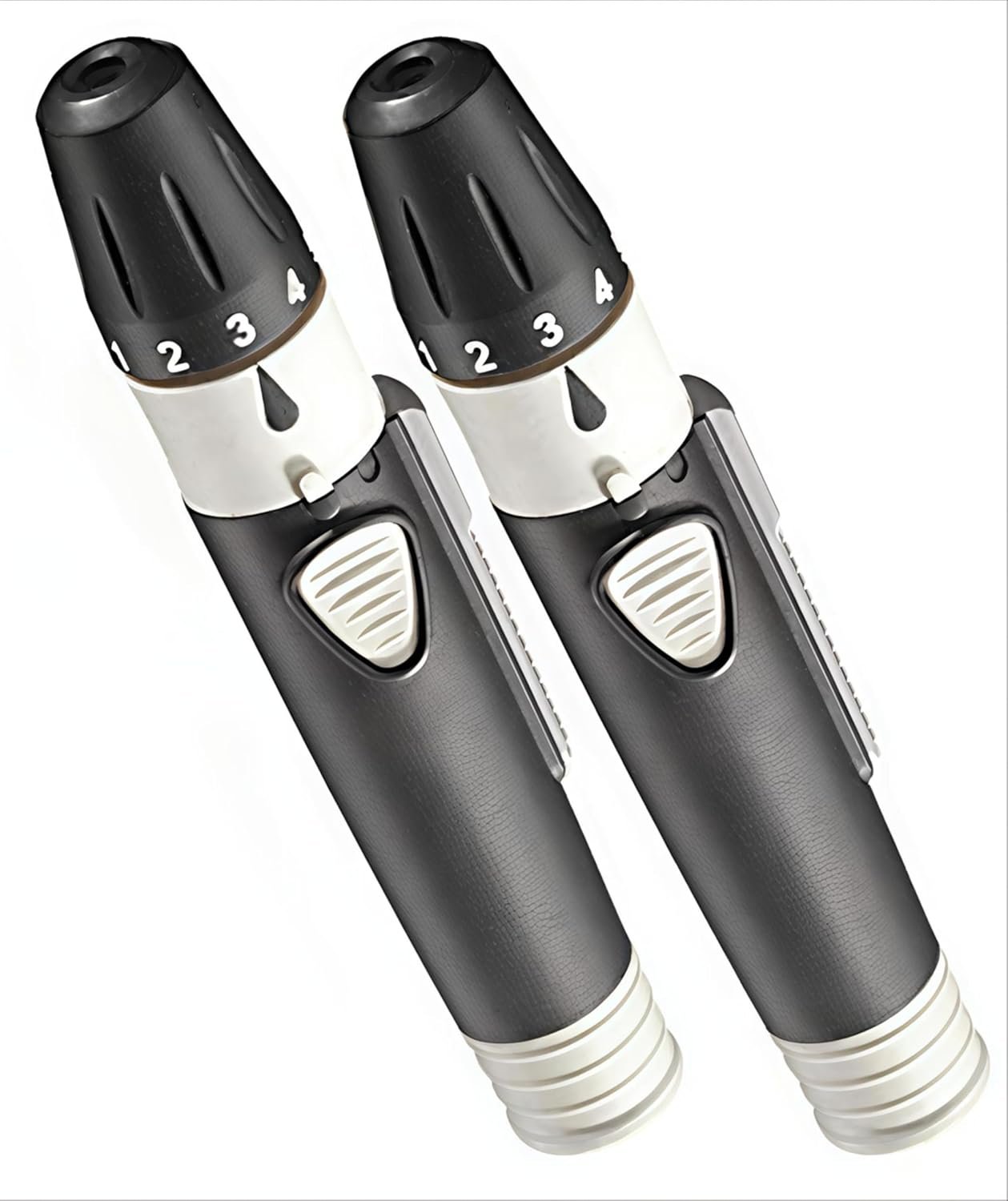
For people who need to collect small blood samples at home or as part of a routine health-monitoring plan, having the appropriate equipment can make the process more organized. A lancing device is a small handheld tool designed to help obtain a drop of capillary blood, commonly from a fingertip. It is frequently associated with blood glucose monitoring, although the appropriate application depends on the testing equipment and the instructions provided by a healthcare professional.
Lancing devices are designed to make the sampling process more controlled than manually handling a lancet. Many models include adjustable depth settings, allowing the user to select from different penetration levels according to the device instructions and individual needs. Some also include a lancet-ejection mechanism intended to make removal of the used lancet more convenient while reducing the need to handle the sharp component directly.
The Lancing Device with Lancet Ejector and five adjustable depth settings is designed around these practical features. The product title also identifies a 1+1 pack configuration, which may provide two devices or a paired package arrangement; the exact contents should be confirmed in the current product listing.
Understanding how a lancing device works is important before incorporating it into a health-monitoring routine. Adjustable depth does not guarantee a painless sample, and an ejection mechanism does not remove the need for safe sharps handling. Users must also make sure the device is compatible with their lancets and follow the instructions for their specific blood-testing system.
This guide explains the purpose of a lancing device, its common features, how it may fit into a blood-sampling routine, what users should consider before using one, and how it differs from other types of blood-sampling tools.
What Is a Lancing Device?
A lancing device is a handheld instrument designed to hold and release a lancet in a controlled manner. A lancet is a small, sharp component intended to create a tiny puncture in the skin so that a small blood sample can be collected.
Lancing devices are commonly used with blood glucose meters. In this setting, the user obtains a drop of capillary blood and applies it to a compatible test strip according to the meter’s instructions.
The device generally contains a mechanism that controls the movement of the lancet. Depending on the model, it may also include a depth selector, a trigger, a cap, and a mechanism for removing the used lancet.
The goal is to make the sampling process consistent and manageable. However, a lancing device does not perform the blood test itself. The meter, test strip, or other compatible testing system is responsible for analyzing the collected sample.
A lancing device should therefore be understood as one component of a broader testing process rather than a complete diagnostic instrument.
Key Features of the Lancing Device with Lancet Ejector
Five Adjustable Depth Settings
One of the defining features in the product title is a depth selector with five settings.
Adjustable depth settings are designed to change how far the lancet penetrates the skin. This can help users adapt the device to their needs within the limits established by the manufacturer.
Skin characteristics, the sampling site, the lancet design, and individual circumstances can affect how much penetration is needed to obtain an adequate sample.
A shallower setting may be sufficient for some users, while others may require a different setting. The appropriate choice should follow the device instructions and guidance from a healthcare professional when needed.
The presence of five settings does not mean that every setting is appropriate for every person. Nor does it guarantee that sampling will be painless. Users should follow the manufacturer’s guidance rather than automatically choosing the shallowest or deepest option.
Lancet-Ejection Mechanism
The product title identifies a lancet ejector, a feature intended to assist with removing the used lancet from the device.
Removing a used lancet can be an important part of the sampling routine because the lancet remains sharp after use.
An ejection mechanism may help reduce the need to touch the used lancet directly. This can make the handling process more convenient, but users must still follow the instructions for their particular device.
The used lancet should be directed into an appropriate sharps container or another disposal system approved by local health guidance. It should never be left loose on a counter or discarded where another person could be injured.
An ejector does not make a lancet safe to handle casually, and it does not replace proper disposal.
Handheld Design
Lancing devices are generally compact tools intended to be held in one hand during use.
A handheld format can make the device convenient to store with other blood glucose monitoring supplies, such as a meter, test strips, alcohol-free hand-cleaning supplies, and a sharps container.
Compactness may also make it easier to organize a testing routine at home or while traveling.
However, the exact dimensions, materials, grip design, and storage accessories of this particular model should be verified in the product listing or manufacturer’s documentation.
1+1 Pack Configuration
The product title includes the phrase “1+1 Pack.” This indicates a paired package configuration, but the exact meaning and contents should be checked before making assumptions.
For example, the listing should clarify whether the package contains two lancing devices, one device plus an accessory, or another arrangement.
If two devices are included, they may provide a spare or allow users to organize supplies in different locations. However, a lancing device should not be shared between people, even when a fresh lancet is installed, unless the manufacturer and applicable healthcare guidance explicitly establish that the equipment is designed for such use. Personal-use lancing devices should generally be treated as individual-use equipment.
The package contents should also be distinguished from lancet quantity. A two-device package does not necessarily mean that lancets are included.
Compatibility With Lancets
Compatibility is an essential consideration for any lancing device.
Lancets can vary in design, dimensions, and attachment mechanisms. A device may be compatible with certain standard lancets but not every product available on the market.
Before using a lancet, check the instructions supplied with the lancing device and the lancet packaging.
Never force a lancet into a holder if it does not fit correctly. An unsuitable component can interfere with proper operation or create a safety issue.
The same principle applies when replacing caps or other removable parts.
How a Lancing Device Can Be Used
A lancing device is usually part of a structured blood-sampling process. The exact steps depend on the device, lancet, testing system, and healthcare instructions.
The following overview explains the general workflow rather than replacing the product manual or professional guidance.
Blood Glucose Monitoring
One of the most common uses for a lancing device is obtaining a small capillary blood sample for a compatible blood glucose meter.
People who monitor glucose may need to collect samples at specified times or under particular circumstances according to their care plan.
The lancing device provides a controlled way to obtain the sample, while the glucose meter and test strip perform the measurement.
Users should follow their meter’s instructions for preparing the sample, applying blood to the strip, and interpreting the result.
A lancing device does not independently determine blood glucose levels, diagnose diabetes, or establish whether a treatment is working.
Routine Home Monitoring
For people who have been instructed to monitor blood glucose at home, keeping supplies organized can make the routine easier to manage.
The lancing device, compatible lancets, glucose meter, test strips, and disposal container should be stored according to their respective instructions.
A consistent preparation routine can help users avoid searching for supplies at the last moment.
It is also important to check that test strips have not expired and that the meter is operating according to its instructions.
Travel and Portable Health Supplies
Some people need to carry blood glucose monitoring equipment when away from home.
A compact lancing device may be stored with other necessary supplies in a suitable case.
When traveling, users should consider temperature limits, protection from contamination, safe storage of unused lancets, and secure disposal of used sharps.
The equipment should remain accessible when needed but protected from accidental damage.
Travel arrangements should follow any relevant airline, workplace, or local requirements for medical supplies and sharps.
Use With Other Compatible Testing Systems
Some testing systems require capillary blood samples for purposes other than routine glucose monitoring. However, a lancing device should only be used for applications supported by the relevant testing equipment and its instructions.
Users should not assume that a device is suitable for every test simply because it can produce a drop of blood.
The type of sample required, the collection method, and any restrictions should be established by the test manufacturer or a qualified healthcare professional.
Who May Find This Type of Lancing Device Useful?
People Monitoring Blood Glucose
People who have been advised to check their blood glucose may use a lancing device as part of their regular testing supplies.
The adjustable depth feature may be relevant to users who need to select an appropriate penetration setting based on the device instructions and their individual circumstances.
The best setting cannot be determined from the product title alone.
Caregivers Supporting an Individual
Caregivers may assist someone with an established monitoring routine, provided they follow appropriate hygiene and safety procedures.
A clear supply organization system can help ensure that the correct device, lancet, meter, and test strips are available.
Caregivers should understand the instructions for the specific equipment and any guidance provided by the individual’s healthcare team.
Personal-use lancing devices should not be shared between different people.
People Organizing Home Medical Supplies
Some users prefer to keep their monitoring equipment in one designated location.
A compact lancing device can be stored with other supplies, provided it remains clean, dry, and protected from damage.
If a paired package contains two devices, users may find it useful to keep a spare available. They should still check the exact package contents and avoid treating a second device as permission to share equipment between people.
People Who Need Adjustable Sampling Depth
A depth selector may be useful for users who have been instructed to adjust the penetration setting.
However, adjustment should be guided by the manufacturer’s instructions and, when necessary, a healthcare professional.
If the user repeatedly cannot obtain an adequate sample or experiences unusual discomfort, the appropriate response is not necessarily to increase the depth automatically. The sampling technique, lancet condition, device compatibility, and relevant medical factors may also need to be considered.
Important Things to Consider Before Use
Follow the Device Instructions
The manufacturer’s instructions should be the primary reference for loading the lancet, selecting a depth setting, activating the mechanism, and removing the used lancet.
Different devices can have different loading and release procedures.
Using the wrong sequence may prevent proper operation or expose the user to the sharp lancet.
Do not attempt to modify the device or use it in a way that is not described by the manufacturer.
Never Share a Lancing Device
A lancing device can become contaminated with blood during use. Even if the visible blood is not obvious, sharing the device can create a risk of transmitting bloodborne infections.
Installing a new lancet does not necessarily make a previously used device safe for another person.
Use a personal device for one individual and follow the manufacturer’s cleaning and disinfection instructions. If a device is explicitly designed for professional multi-patient use, follow the specific procedures and requirements established for that equipment and setting.
For ordinary personal-use lancing devices, individual use is the safer default.
Use a New Lancet for Each Sampling Event
Lancets are generally intended for single use unless their manufacturer explicitly states otherwise.
Reusing a lancet can make it less sharp and may increase the risk of discomfort, skin irritation, or contamination.
A used lancet should not be returned to the package of unused lancets.
Follow the instructions for inserting a new lancet and disposing of the old one.
Keep Hands and Sampling Areas Clean
Clean hands are an important part of safe blood glucose monitoring.
Follow the meter manufacturer’s instructions for washing and drying hands before testing. Moisture, food residue, or other substances on the skin can affect sample quality in some circumstances.
The skin should be clean and dry before sampling.
If the sampling area is irritated, injured, infected, or otherwise unsuitable, follow professional guidance about an appropriate alternative.
Understand the Depth Selector
Five depth settings provide options, but more penetration is not automatically better.
The appropriate setting depends on the device design, the sampling location, and individual needs.
Users should begin with the manufacturer’s recommended procedure and adjust only according to the instructions.
If obtaining a sample is consistently difficult, consider whether the lancet is compatible, the device is loaded correctly, or the procedure needs to be reviewed with a healthcare professional.
Do Not Assume the Device Is Painless
A lancing device is intended to help obtain a small blood sample, but it cannot guarantee a pain-free experience.
Discomfort can depend on the depth setting, lancet condition, technique, sampling location, and individual sensitivity.
Users who experience persistent pain, unusual bleeding, or repeated difficulty obtaining a sample should seek appropriate guidance rather than continuing to change settings without understanding the cause.
Lancet Ejection and Sharps Safety
An ejector may reduce direct contact with the used lancet, but it does not eliminate sharps risks.
Used lancets should be placed in an approved sharps container or another disposal system recommended by local health authorities.
Do not leave used lancets exposed on a table, place them in a pocket, or discard them loosely in a bag.
Keep both new and used lancets out of reach of children and anyone who could be accidentally injured.
Check Compatibility Before Purchasing
The lancing device should be compatible with the lancets the user intends to use.
Check the product documentation for the supported lancet design and any restrictions.
Do not assume that all lancets are interchangeable across every device.
If the product listing does not clearly explain compatibility, seek clarification from the seller or manufacturer before relying on it for routine monitoring.
Understand What the Device Does Not Do
A lancing device collects a blood sample. It does not measure glucose, interpret medical results, or recommend treatment.
The associated meter and test strips have their own requirements and limitations.
For blood glucose monitoring, follow the care plan established with a healthcare professional. Do not change medication or treatment based solely on an isolated reading without following the guidance appropriate to the situation.
Inspect the Device Regularly
Before use, check the device for visible damage, loose components, or signs that the mechanism is not operating correctly.
Follow the manufacturer’s cleaning instructions and do not immerse the device in liquids unless the instructions specifically permit it.
If the ejector, trigger, or depth selector becomes difficult to operate, stop using the device until its condition and suitability have been checked.
Comparing Adjustable Lancing Devices With Fixed-Depth Designs
Lancing devices vary in how much control they provide over the penetration depth.
Adjustable-Depth Devices
An adjustable-depth device offers multiple settings intended to change the lancet’s penetration level.
This can provide flexibility for people whose sampling needs vary or who have been advised to select a particular setting.
The number of available settings does not, by itself, establish that a device will produce better results. The usefulness of the adjustment depends on the mechanism, instructions, compatible lancet, and user requirements.
Fixed-Depth Designs
Some lancet systems use a fixed or more limited penetration design.
These may be simpler to operate because there are fewer settings to select. Their suitability depends on the particular sampling requirements and the instructions provided with the device.
A fixed-depth product may be appropriate for some applications, while an adjustable device may be more suitable for others.
Neither category should be chosen solely on the assumption that more settings guarantee greater comfort.
Comparing Lancet Ejectors With Manual Removal
Another difference between lancing devices is how the used lancet is removed.
Devices With an Ejector
An ejector is intended to release the used lancet through a mechanism rather than requiring the user to handle it directly in the same way as manual removal.
This may simplify the removal step, although the user still needs to direct the lancet into an appropriate sharps container.
The mechanism should be operated exactly as described in the instructions.
Manual-Removal Designs
Some devices require the user to remove the cap and carefully detach the used lancet according to the manufacturer’s procedure.
This may involve more direct handling, so following the instructions is particularly important.
Regardless of the removal design, the used lancet remains a sharp object and must be disposed of safely.
Building an Organized Blood-Sampling Routine
A consistent routine can help users keep their monitoring supplies organized and reduce avoidable mistakes.
Prepare the Necessary Supplies
Before starting, gather the lancing device, a new compatible lancet, the appropriate meter or testing equipment, test strips if required, and a suitable disposal container.
Check the expiration dates and condition of any consumables.
Follow the Prescribed Testing Schedule
The timing and frequency of blood glucose testing should follow the individual’s care plan and the meter’s instructions.
A lancing device does not determine when testing is medically necessary.
Record Results When Appropriate
For users who have been instructed to monitor glucose, recording results can help identify patterns and support discussions with a healthcare professional.
Use the meter’s instructions or the record-keeping method recommended by the care team.
Dispose of Used Sharps Immediately
Do not leave a used lancet on a work surface while finishing other tasks.
Follow the device instructions for removal and place the lancet in an appropriate sharps container.
Store Equipment Properly
After use, store the device according to the manufacturer’s guidance.
Keep it clean, dry, and protected from accidental activation or damage. Store lancets securely away from children.
Frequently Asked Questions
What is a lancing device used for?
A lancing device holds and releases a lancet to create a small puncture in the skin for collecting a capillary blood sample. It is commonly used with compatible blood glucose meters.
What do the five adjustable depth settings mean?
They provide five available penetration settings intended to change how deeply the lancet enters the skin. The appropriate setting depends on the device instructions and individual needs. Five settings do not guarantee a painless sample.
What is a lancet ejector?
A lancet ejector is a mechanism intended to assist with removing a used lancet from the device. It may reduce the need to handle the lancet directly, but the used sharp must still be disposed of safely.
Does the lancing device measure blood glucose?
No. The lancing device collects the blood sample. A compatible glucose meter and test strip perform the measurement.
Are lancets included in the 1+1 pack?
The product title identifies a 1+1 pack, but that wording alone does not establish exactly which items are included. Check the current Amazon listing for the complete package contents and whether lancets are supplied.
Can the device be used with any lancet?
Not necessarily. Compatibility depends on the device’s design and supported lancet type. Follow the product instructions and do not force an incompatible lancet into the holder.
Can the same lancing device be shared by family members?
Personal-use lancing devices should not be shared. Blood contamination can create a risk of transmitting infection, and inserting a new lancet does not necessarily make a previously used device safe for another person.
Should a lancet be reused?
Lancets are generally intended for single use unless the manufacturer explicitly provides different instructions. Reusing a lancet may increase the risk of contamination, discomfort, or skin irritation.
Does an adjustable-depth device guarantee less pain?
No. Adjustable depth can provide options, but discomfort depends on multiple factors, including the lancet, sampling technique, skin characteristics, and individual sensitivity.
How should used lancets be discarded?
Follow the manufacturer’s instructions and local health guidance. An approved sharps container is commonly used to contain used lancets and reduce accidental injury.
How should the lancing device be cleaned?
Follow the cleaning and disinfection instructions for the specific device. Do not immerse it or use cleaning chemicals that the manufacturer has not approved.
What should I do if I cannot obtain enough blood?
Follow the instructions for the device and blood-testing system. Check that the correct compatible lancet is installed and that the device is being used as directed. If the problem continues, ask a healthcare professional for guidance rather than repeatedly increasing the depth without understanding the cause.
Can the device replace a blood glucose meter?
No. A lancing device and a glucose meter serve different purposes. The lancing device collects a sample, while the meter and compatible test strip measure glucose.
Is this type of device suitable for children?
Suitability depends on the child, the testing system, and the advice of a qualified healthcare professional. Adults should follow the relevant care instructions, supervise use where appropriate, and keep lancets and other sharps securely stored.
Conclusion
The Lancing Device with Lancet Ejector and five adjustable depth settings is designed to support controlled capillary blood sampling through a handheld mechanism, a choice of penetration settings, and an ejector intended to assist with removing used lancets. Its listed 1+1 pack configuration may also be relevant to users looking for a paired package, although the exact contents should be verified in the product listing.
For people who monitor blood glucose using a compatible system, a lancing device can be an important part of the overall routine. Adjustable depth settings offer options for following the manufacturer’s instructions, while an ejector may make lancet removal more convenient.
The device should not be evaluated on those features alone. Lancet compatibility, correct operation, hygiene, individual use, safe sharps disposal, and appropriate blood-testing procedures are essential considerations. It is also important to remember that the lancing device collects the sample but does not perform the test or provide a diagnosis.
A well-organized monitoring routine combines the correct equipment with clean hands, compatible consumables, careful handling, and the guidance provided by the device manufacturer and healthcare professional.
For anyone considering this type of equipment, checking the complete product specifications and instructions is a useful first step.
Leave a Reply